
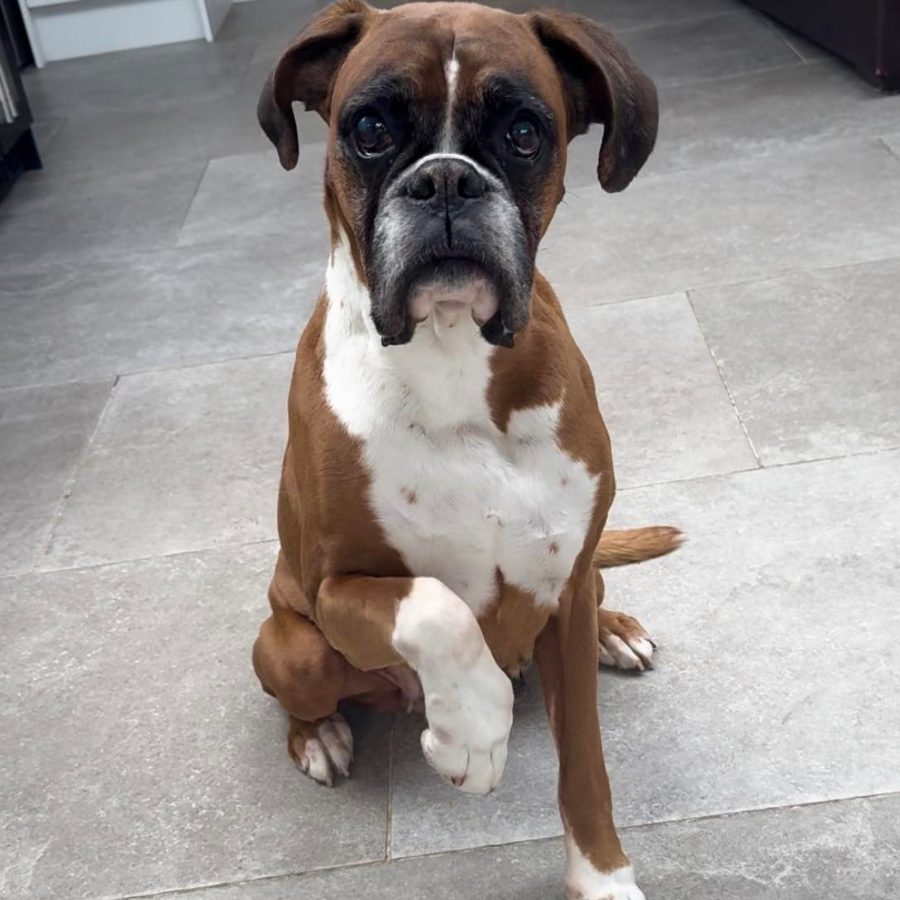
It May Not Be “Just Age” — 5 Subtle Signs Your Dog Might Have Arthritis
May is International Arthritis Awareness Month, and I want to draw attention to five subtle signs that your dog may be experiencing arthritic pain or joint discomfort.
What is arthritis?
First, let’s talk about what arthritis actually is. There are several different types of arthritis, and although they are often grouped together, their causes can be very different.
Types of arthritis
· Osteoarthritis (OA) – the most common type; caused by degeneration of the joints.
· Immune-Mediated Polyarthritis (IMPA) – caused by the immune system attacking the joints.
· Septic (Infectious) Arthritis – caused by bacterial, viral, or fungal infection. This often causes sudden lameness with significant heat and swelling in the joint.
· Traumatic Arthritis – arthritis that develops after injury or trauma to a joint.
For this blog, we are going to focus on Osteoarthritis (OA).
Osteoarthritis is the most commonly diagnosed joint disease in both human and veterinary medicine. It involves the breakdown and attempted repair of the joints, which leads to mechanical dysfunction (Allen, Thoma, & Golightly, 2022; Felson, 2000; Alam, Lee, Kim, & Kim, 2011).
Due to the changes that occur within the joint, OA is progressive. It can be treated and managed, but currently it cannot be cured.
Most people think OA only affects elderly dogs, cats, and people — but that simply is not true. OA commonly develops secondary to other joint conditions such as hip dysplasia and patella luxation, which can be diagnosed in dogs as young as 6 months old.
Often, we only start to recognise symptoms later in life, once OA has already caused noticeable changes in how a dog moves. By this stage, there may already be significant joint damage and chronic pain.
The challenge is that we often miss the subtle early signs.
To make things even more complicated, your dog may appear to have “good days” and “bad days.” Arthritis can flare up, causing symptoms to worsen for short periods of time. However, just because your dog seems better after a couple of days of rest does not mean the pain has gone away. The joint changes are still present, and chronic pain often continues in the background.
5 Subtle Signs Your Dog May Have Arthritis
1. Slowing down
We often assume slowing down is a normal part of ageing, but in many cases dogs become less active because movement has become painful.
Remember — there are people in their 80s running marathons. Age alone does not automatically mean reduced activity.
If your dog no longer enjoys their usual walks, stops more frequently, seems reluctant to exercise, or just doesn’t seem as happy out and about, don’t dismiss it as “just old age.”
2. Grunting, moaning, or panting more
Have you ever noticed people making little “ooh” noises when they sit down or stand up? Dogs can do something very similar.
It may sound like moaning, groaning, huffing, or heavier panting when they get up from bed, jump off the sofa, or lie down.
These subtle noises can be a sign that movement is uncomfortable.
3. Changes in behaviour or sociability
Pain can make all of us miserable — and the same is true for our pets.
Has your dog become “grumpy”? Are they avoiding interaction more than usual? Do they no longer want to play with children or spend as much time with the family?
Maybe they’ve growled when touched in a way they never did before.
This may not be aggression. Often, it is your dog trying to communicate: “Please leave me alone” or “That hurts.”
When we are sore, we often want space — dogs are no different.
4. Changes in the fur coat pattern
No — it’s not always because they slept funny!
Increased muscle tension and tightness in the fascia can change the direction or pattern of the fur. You may notice areas where the coat sticks up, swirls differently, or looks uneven.
This can happen even in short-coated dogs, although it may be less obvious.
5. Increased licking
Dogs do lick themselves as part of normal grooming, but repeated licking of one particular area can indicate discomfort.
When humans are sore, we often rub the painful area. Licking is often a dog’s version of this behaviour.
Managing Osteoarthritis
Although OA cannot be cured, there is still a lot that can be done to improve your pet’s comfort and quality of life.
The best management approach usually involves a combination of the following:
Weight management
Be honest with yourself — could your dog benefit from losing weight?
Even a small reduction in body weight can make a huge difference to painful joints. Studies show that losing as little as 10% of body weight can significantly improve mobility and comfort.
Home environment changes
Non-slip rugs and flooring grips can really help.
Slipping on wooden, tile, or laminate flooring places extra strain on the joints and can increase inflammation and pain.
Physiotherapy
Physiotherapy can play a huge role in managing OA.
This may include:
· Massage
· PEMF therapy
· Laser therapy
· Targeted strengthening exercises – this is the most import part of physiotherapy
· Hydrotherapy – in conjunction with the above.
The exercises are especially important, as stronger muscles help support and protect the joints.
Remember: motion is lotion for joints.
Supplements
There are hundreds of supplements on the market, so it’s important to do your research and speak to a professional.
Common ingredients include:
· Green-lipped mussel
· Boswellia
· Turmeric
· Omega-3 fish oils
Pain relief medication
Supplements are not a replacement for pain medication.
Many owners assume that if their dog is taking supplements, they no longer need pain relief — but they work very differently.
Pain medications can only be prescribed by your veterinarian. Some dogs may only need short-term pain relief, while others may require longer-term management.
Speak to your vet about the best options for your pet.
Regenerative medicine
These treatments may include:
· Stem cell therapy
· PRP (platelet-rich plasma)
· Joint injections to improve lubrication and comfort
Surgery
In severe cases, surgery or joint replacement may be recommended.
Final thoughts
If any of these signs sound familiar, please speak to your veterinarian and a qualified veterinary physiotherapist.
If you are unsure, I have also put together a comfort scale that you can use to monitor your dog and share your observations with your vet.
Early recognition and treatment can make a huge difference to your pet’s comfort, mobility, and quality of life.



Leave a Reply
Want to join the discussion?Feel free to contribute!